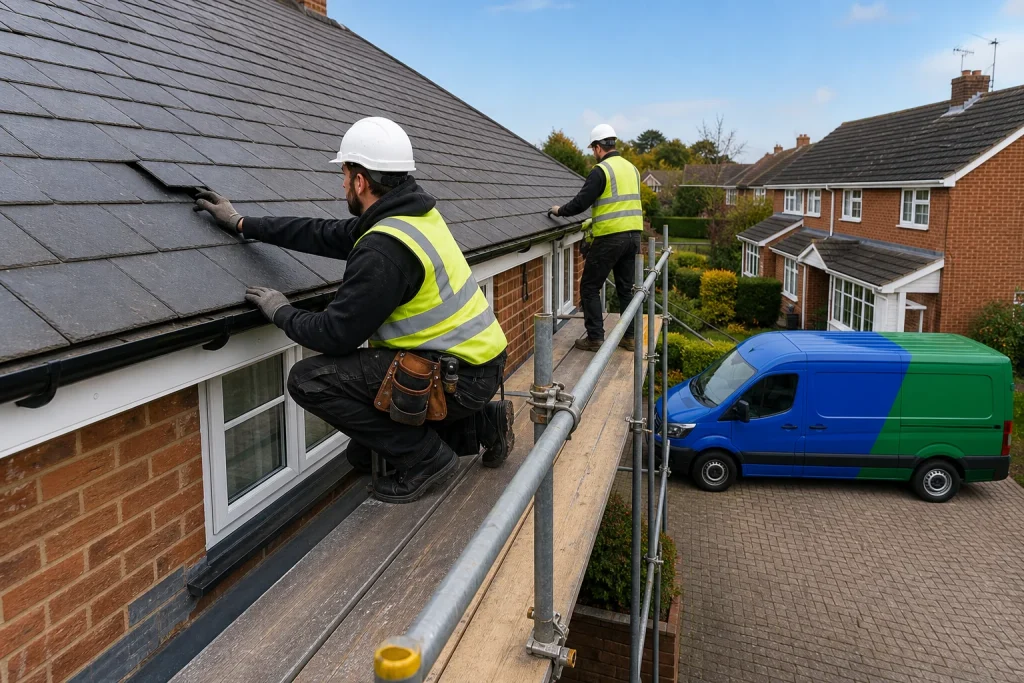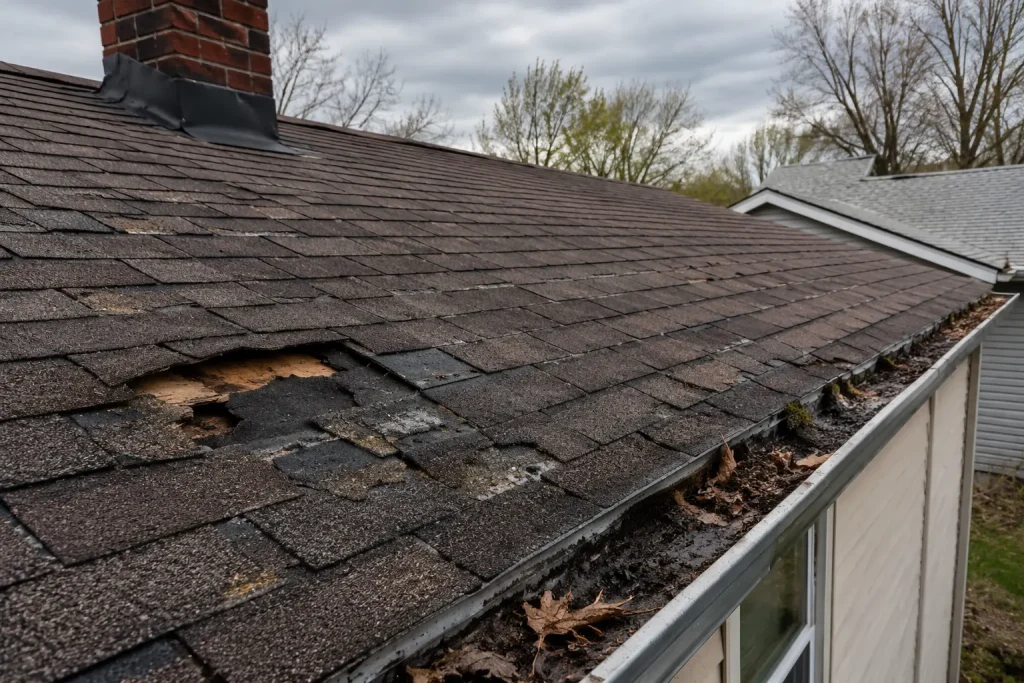
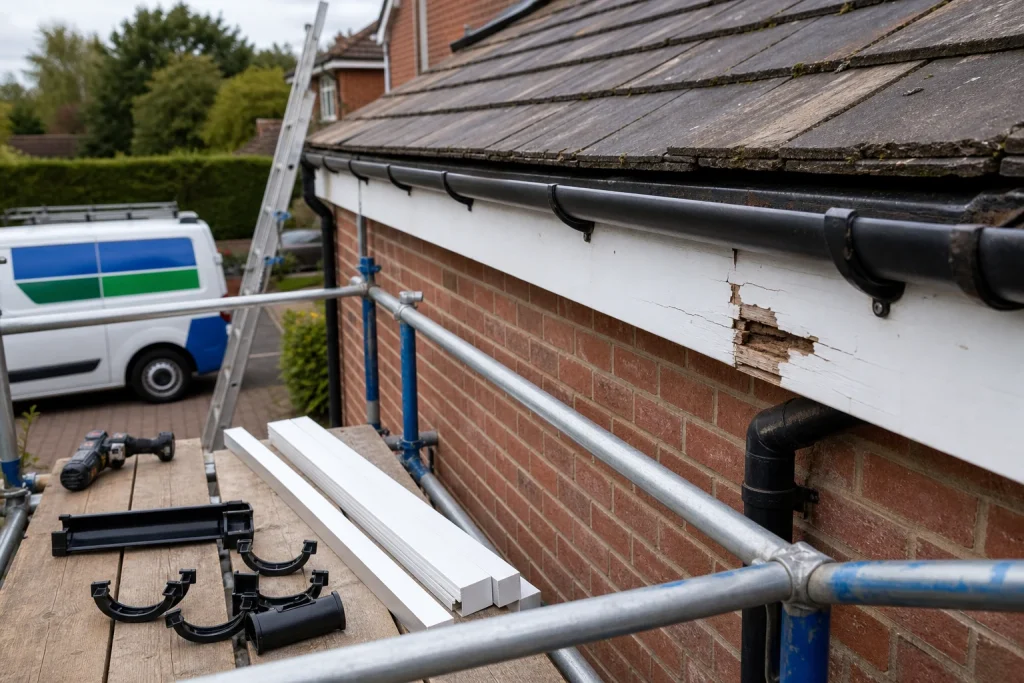
Gutters can only do their job properly when they are fixed to a sound, straight edge. If the fascia board behind them starts to soften, split, loosen or bow, the guttering can gradually drop out of line.
That small change at roof level can lead to overflowing water, damp marks, staining, loose brackets and avoidable pressure on the roof edge. Understanding the link between fascias and gutters helps you spot problems earlier and keep the whole roofline working as it should.
Why fascias matter to gutter alignment
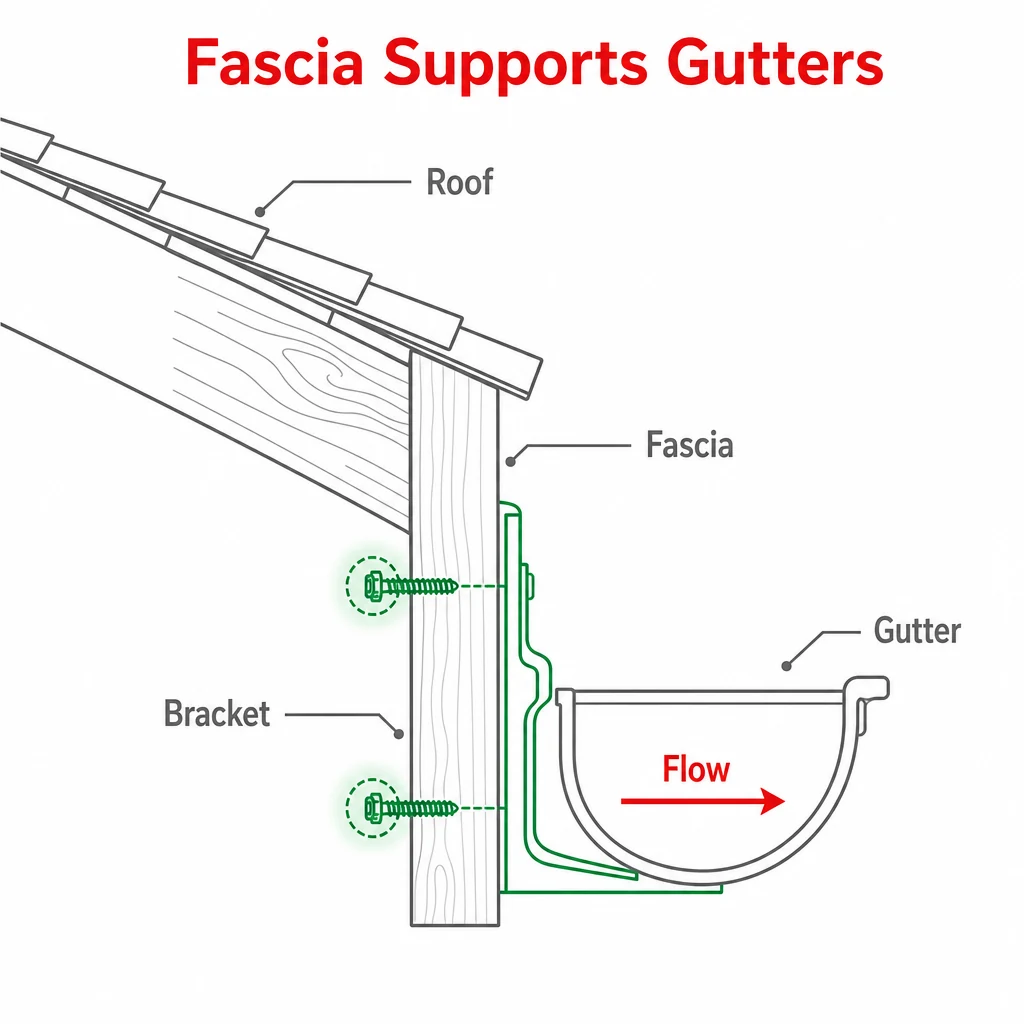
Fascia boards sit along the lower edge of the roof, usually where the rafters meet the outside wall. They provide a neat finish, help support the bottom row of tiles or slates, and give gutter brackets a firm fixing point.
For a gutter to drain well, it needs a gentle fall towards the outlet. That fall is created by setting the brackets at the right height and spacing. When the fascia is solid, the brackets stay where they were fixed. When the fascia weakens, the brackets can move, pull forward or sag.
This is why a gutter problem is not always just a gutter problem. If the gutter has dropped, twisted or started spilling water over one section, the condition of the fascia behind it should be checked as part of the diagnosis.
How damaged fascia boards affect drainage
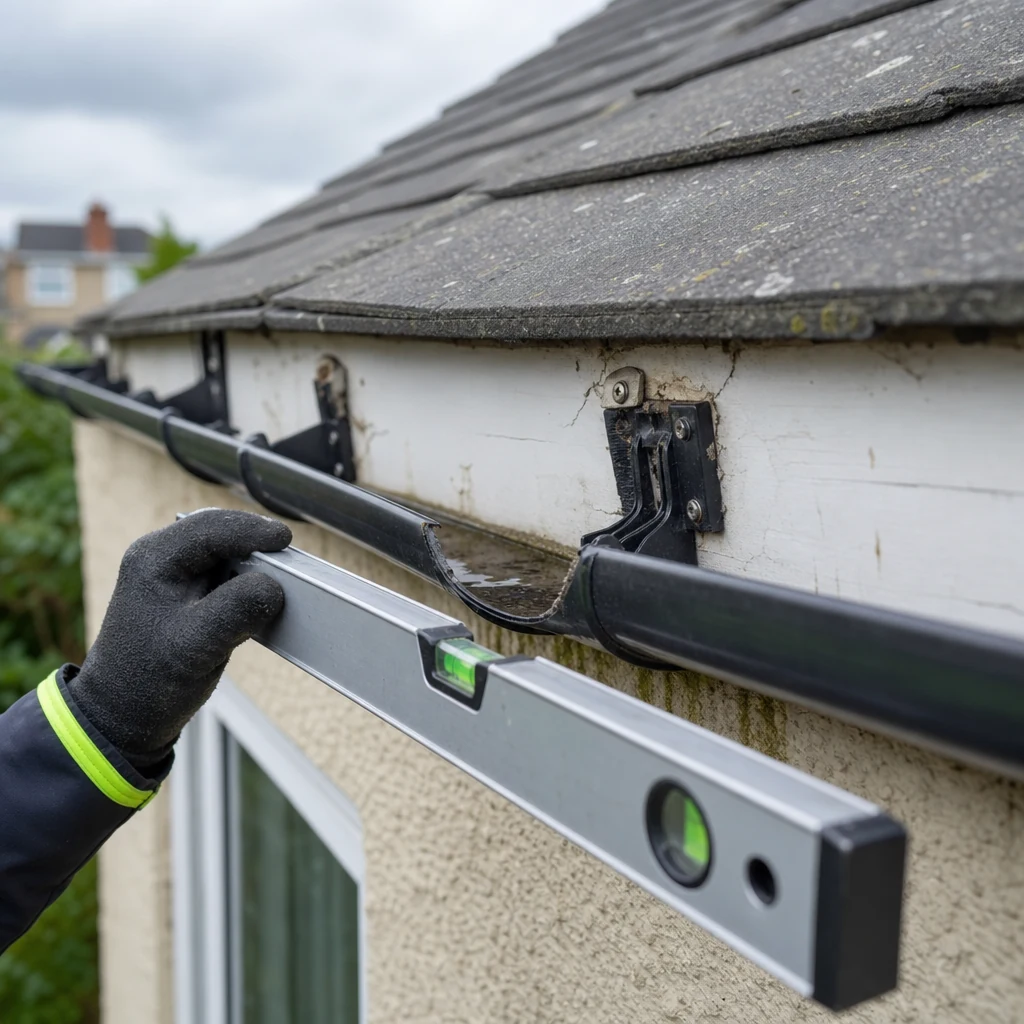
A gutter that is only slightly out of line can still look acceptable from the ground, but water is much less forgiving than the eye. Instead of running steadily towards the downpipe, it may sit in a low point, back up during heavy rain or pour over the front edge.
Common fascia-related drainage issues include:
- Brackets pulling loose because the board no longer holds fixings securely.
- Sections of gutter sagging between brackets.
- Water pooling instead of flowing towards the outlet.
- Joints opening slightly as the gutter twists under strain.
- Overflowing water soaking the wall, roof edge or ground below.
Over time, standing water also adds weight. That extra load can make weak fixings worse, especially when debris such as moss, leaves and grit builds up inside the gutter. If you want a wider look at the role gutters play in roof protection, CPS Roofing has also covered how gutters help protect a roof over time.
Signs the fascia may be the real problem
It is tempting to blame overflowing gutters on a blockage, and blockages are certainly common. However, if gutters keep overflowing after cleaning, or if one section looks lower than the rest, the fascia should be inspected.
Look out for these warning signs from ground level:
- Gutters dipping in the middle or pulling away from the roofline.
- Visible gaps between the gutter and fascia board.
- Peeling paint, flaking timber or dark staining along the board.
- Water marks directly below a gutter joint or bracket.
- Loose, missing or uneven gutter clips and brackets.
- Birds, insects or damp patches near the roof edge.
You do not need to climb a ladder to investigate. A careful ground-level look after rainfall can tell you a lot. If water is escaping at the same point every time, or the line of the gutter has visibly changed, it is worth arranging a proper roofline inspection.
Why the issue should be fixed together
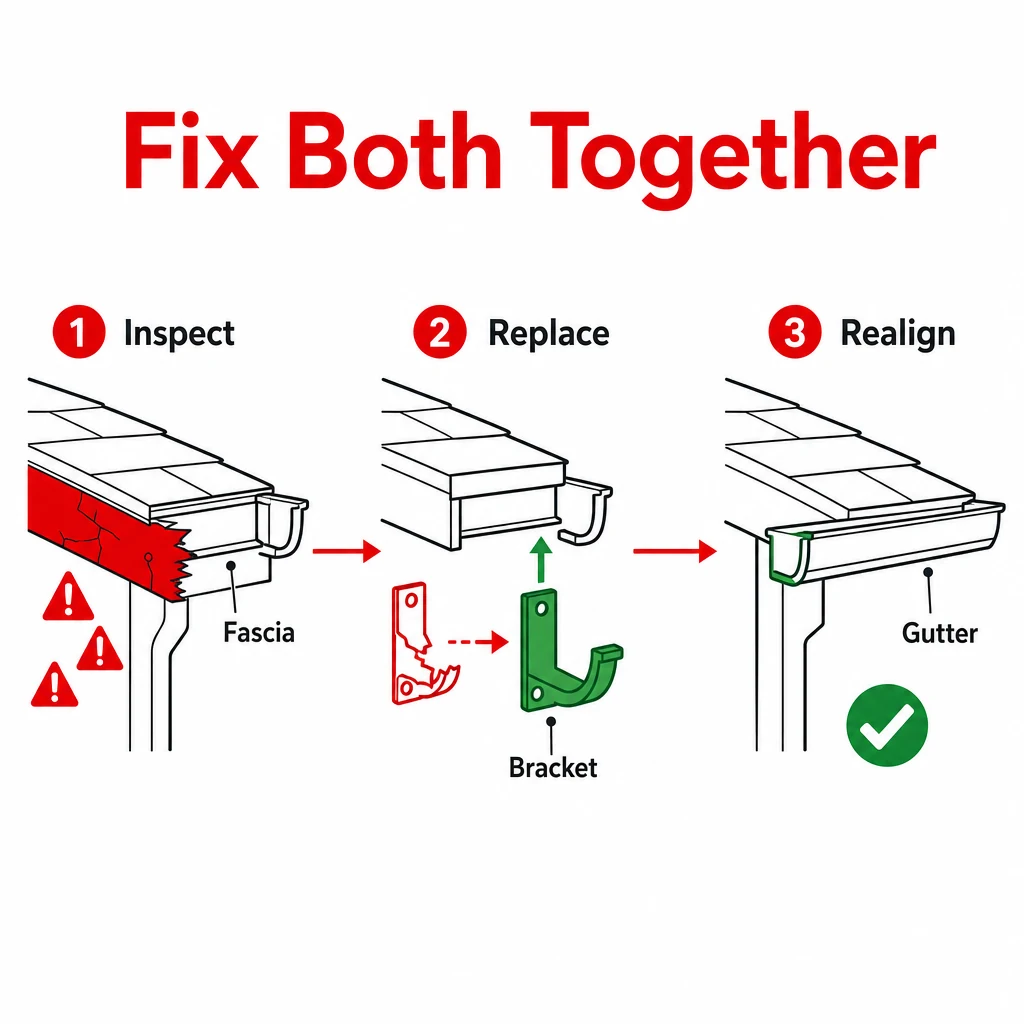
Replacing or refixing a gutter onto a damaged fascia rarely solves the problem for long. The new fixings still depend on the strength of the board underneath. If that board is soft, split or loose, the gutter can move again once it fills with rainwater.
A better approach is to look at the fascia, soffit and guttering as one connected roof-edge system. The fascia provides the fixing point, the soffit helps close and protect the underside of the roof edge, and the guttering carries water safely away.
Where the fascia is in reasonable condition, a targeted repair may be enough. That could involve securing loose sections, replacing fixings and resetting the gutter fall. Where the board has deteriorated, replacement is usually the tidier and more reliable answer. Fresh fascia boards give the gutter brackets a firm base, allow the gutter run to be set correctly, and improve the finished appearance of the roofline.
CPS Roofing provides guttering, soffit and fascia work for homes and small buildings, including repairs and replacement where the roof edge needs a clean, dependable finish.
What a tidy repair normally involves
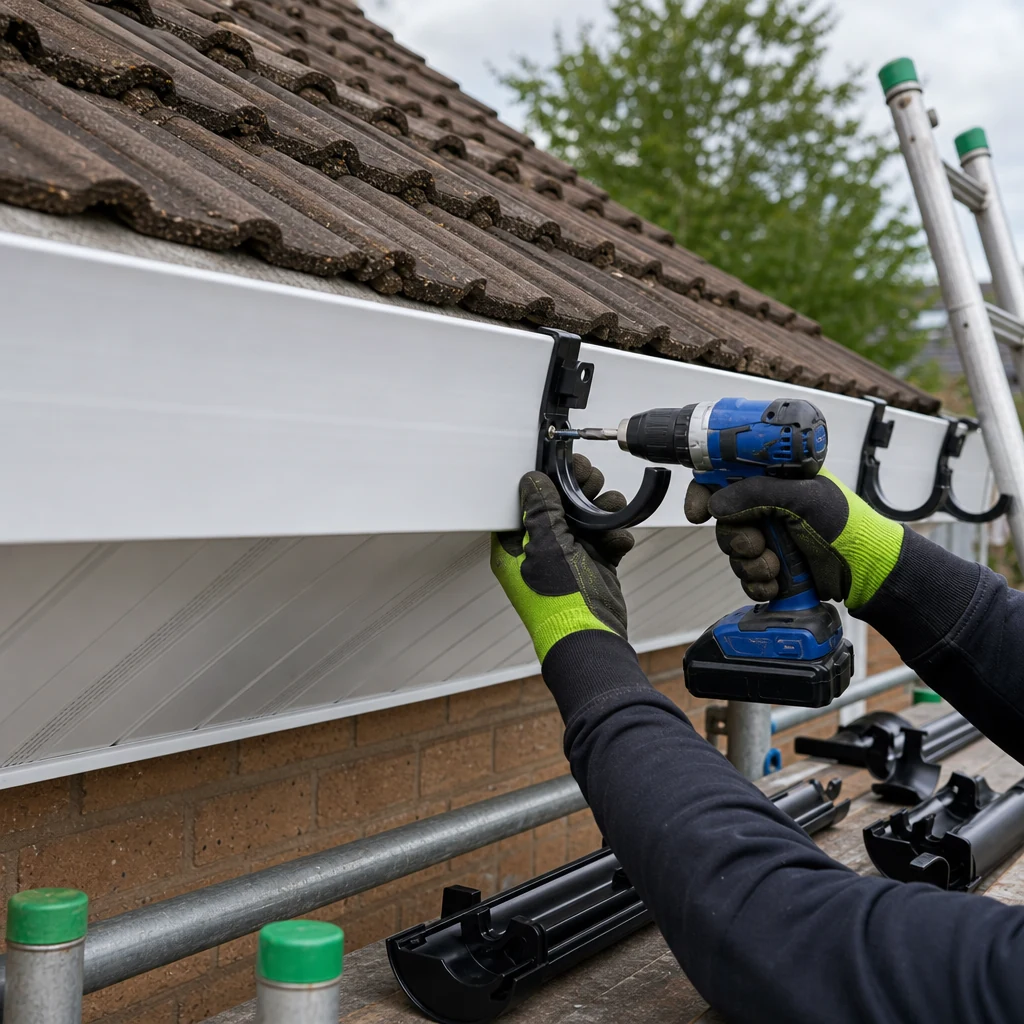
A professional roofline repair starts with finding the cause, not just treating the symptom. The gutter may need clearing, but the installer should also check the fascia condition, bracket spacing, outlet position, joints, downpipe flow and the edge of the roof covering.
Depending on what is found, the work may include:
- Removing debris and checking that downpipes are flowing freely.
- Taking down affected gutter sections without damaging the roof edge.
- Repairing or replacing damaged fascia boards.
- Checking soffits and ventilation where accessible.
- Refitting gutter brackets at the correct spacing and fall.
- Testing the run so water drains cleanly towards the outlet.
This kind of repair is also a good opportunity to tidy old mismatched parts, tired joints or poorly spaced brackets. The goal is not just to stop an overflow, but to leave the roof edge straight, secure and easier to maintain.
When gutter problems point to wider roof issues
Most fascia and gutter faults are roofline issues, but they can sometimes sit alongside other roofing problems. Water entering behind the gutter may be linked to damaged felt, slipped tiles, failed roof-edge detailing or a leak higher up the roof.
Warning signs that the issue may go beyond the fascia include damp patches inside, staining near ceilings, water tracking through the loft, slipped or broken roof coverings, or repeated overflow even after the gutter line has been corrected.
In those cases, it makes sense to have the roof checked as well as the guttering. CPS Roofing also offers roof repair services where leaks, damaged coverings or weather-related issues need attention alongside roofline work.
The important point is to avoid treating every overflow as a simple blockage. A straight, secure fascia is part of what allows guttering to work properly in the first place.
- Fascia boards give gutter brackets the secure fixing point they need.
- Damaged or loose fascias can cause gutters to sag, twist, overflow or drain the wrong way.
- Repeated gutter problems after cleaning often point to alignment or roofline issues.
- The best fix usually checks fascias, soffits, brackets, outlets and downpipes together.
- A tidy repair protects the roof edge as well as improving the look of the property.
Frequently asked questions
Can damaged fascias make gutters overflow?
Yes. If the fascia board moves, softens or stops holding brackets firmly, the gutter can drop out of line. Even a small sag can cause water to pool or spill over instead of flowing to the downpipe.
Do I need new gutters if the fascia is damaged?
Not always. If the guttering itself is in good condition, it may be possible to remove it, repair or replace the fascia, then refit the guttering correctly. If the guttering is warped, cracked or poorly fitted, replacement may be the better option.
How can I tell if the fascia is rotten or loose?
From ground level, look for peeling paint, dark staining, uneven gutter lines, gaps behind the gutter or brackets pulling away. A professional inspection can confirm the condition safely without guesswork.
Should fascias, soffits and gutters be replaced at the same time?
They do not always have to be replaced together, but they should be assessed together. Because they work as one roof-edge system, checking all three helps make sure the repair is neat, secure and long lasting.
Need help with your roofline?
If your gutters are sagging, overflowing or pulling away, CPS Roofing can inspect the fascia and guttering together and recommend a tidy, practical fix.