
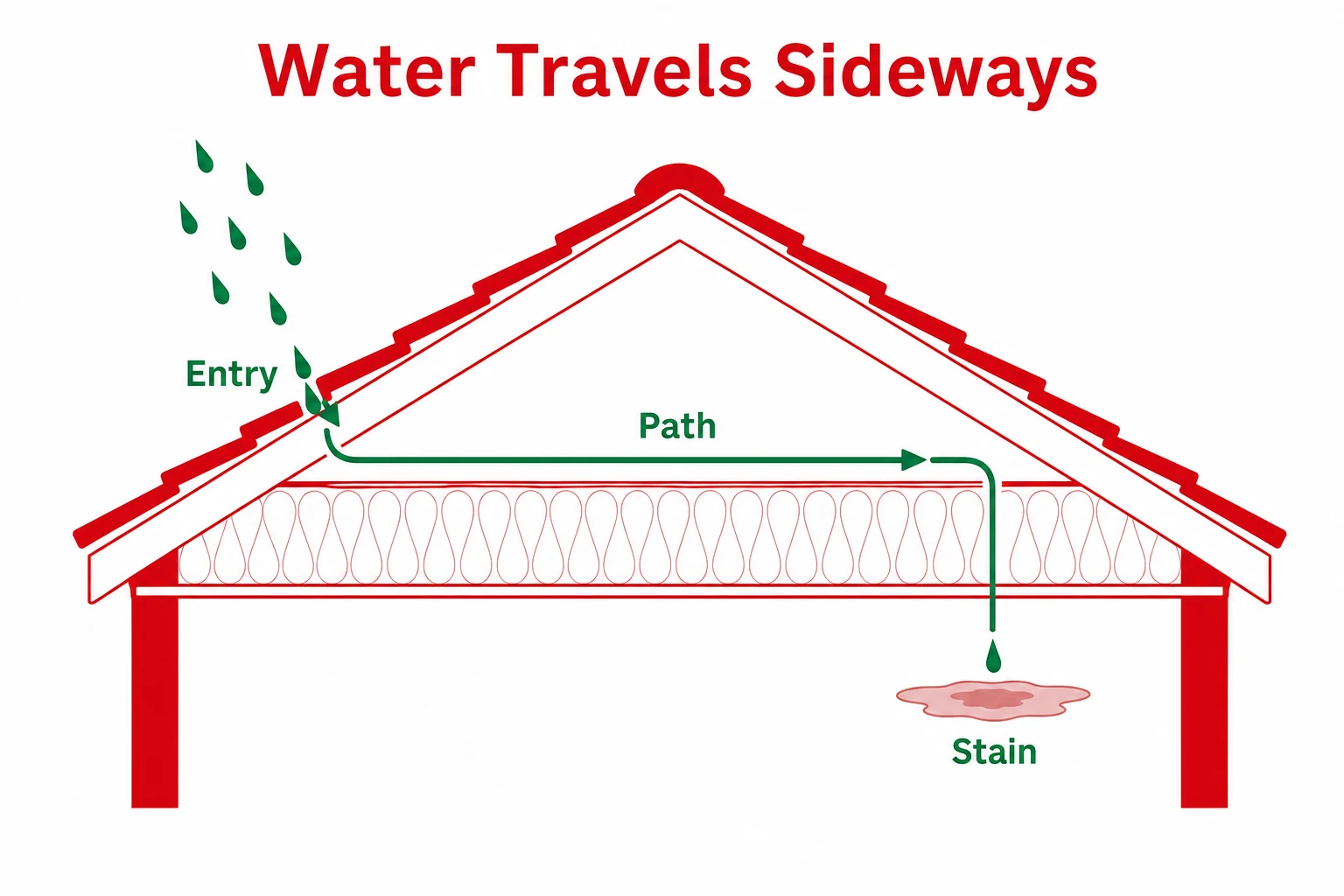
A roof leak is not always directly above the damp patch you can see indoors. Water can enter at one point, travel through the roof structure, then appear somewhere completely different.
That is why a stain on a ceiling, a drip near a window or damp around a light fitting can be misleading. The visible damage tells you there is a problem, but it rarely tells you the full route the water has taken.
Why water does not always fall straight down
It is natural to look straight above a damp patch and expect the source of the leak to be there. Sometimes it is. A cracked tile, damaged flashing or split section of flat roofing directly above the mark can allow rainwater to pass through and show quickly indoors.
In many cases, though, roof leaks behave less neatly. Roofs are built in layers. Tiles, slates, underlay, battens, boards, insulation, timbers and ceilings can all affect where water moves. Once rain gets past the outer covering, it may run along an underlay, drip onto a rafter, follow a timber, collect around insulation or track along the back of plasterboard before becoming visible.
Gravity still matters, but it does not mean water will always drop vertically. It will follow the easiest path available. That path may be shaped by roof pitch, joints, laps in materials, fixings, old repairs, ceiling levels and small changes in the roof structure. By the time the leak appears indoors, the original entry point can be several metres away.
This is one reason professional roof leak tracing and roof repairs are so valuable. The aim is not just to cover the damp patch. It is to find how the water entered, where it travelled and what needs repairing so the problem is properly resolved.
Common hidden paths water can take through a roof
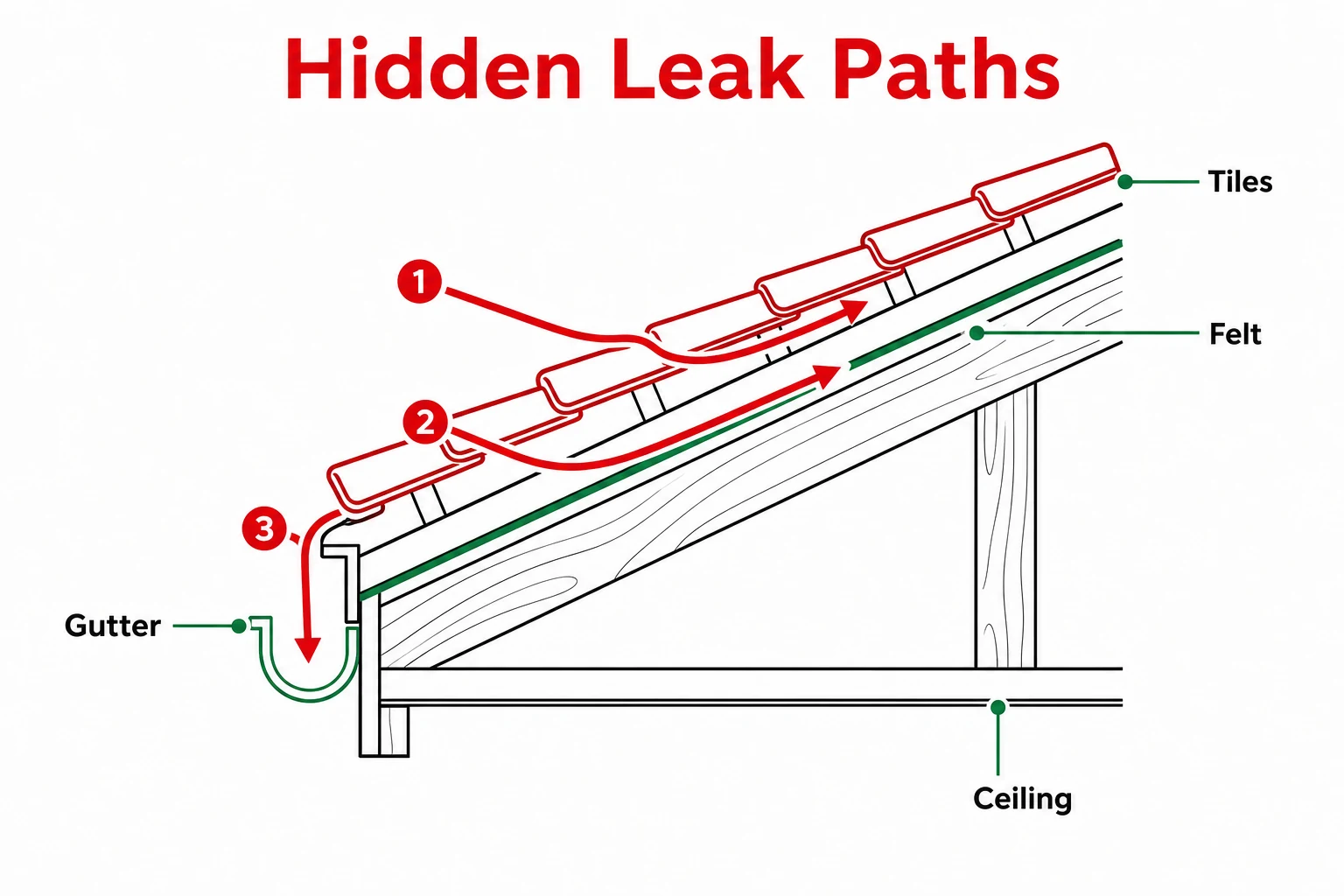
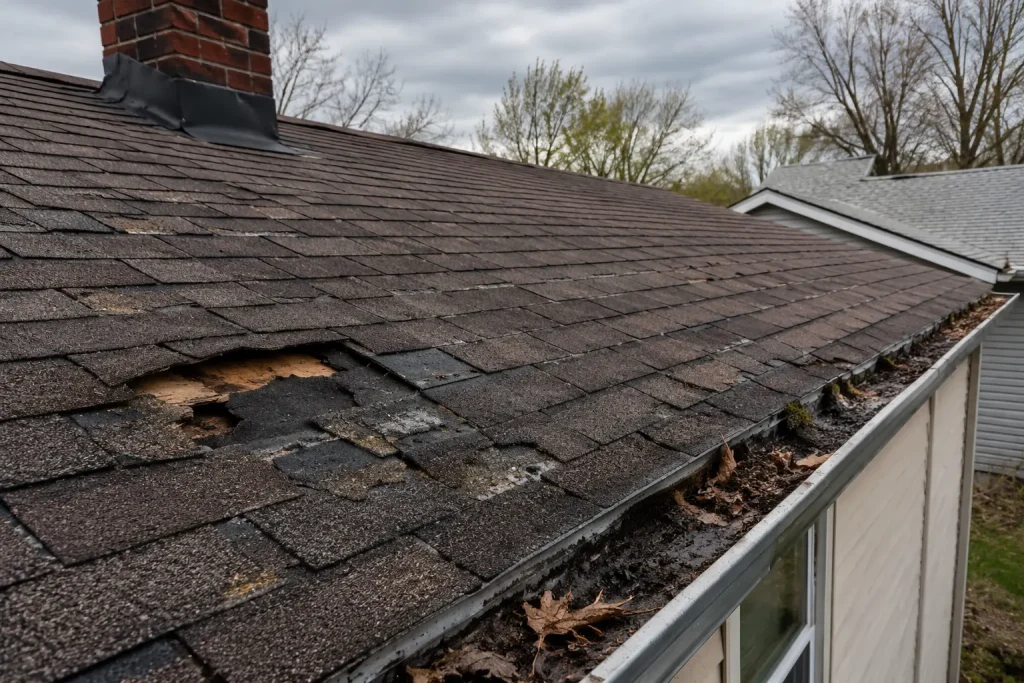
Different roof types create different leak paths. On a pitched roof, water may get beneath slipped, cracked or missing tiles, but the leak can still appear elsewhere because the underlay and battens can channel it sideways or down the slope. If the underlay is torn, perished or poorly lapped, water may pass through at a weak point that is separate from the tile defect itself.
Flashings are another common route. Around chimneys, roof edges, abutments, roof windows and joins, small gaps can admit water during wind driven rain. Once inside, water can run along timber or masonry before it reaches the ceiling. This can make it look as though the leak is coming from a different part of the roof.
Flat roofing can be just as deceptive. A split, lifted edge, failed seam, puncture or weak outlet detail may allow water through, but the moisture can then move beneath the membrane or across the deck before it finds a route into the building. Water may also sit beneath surface layers if drainage is poor, which can make the source harder to identify from inside alone.
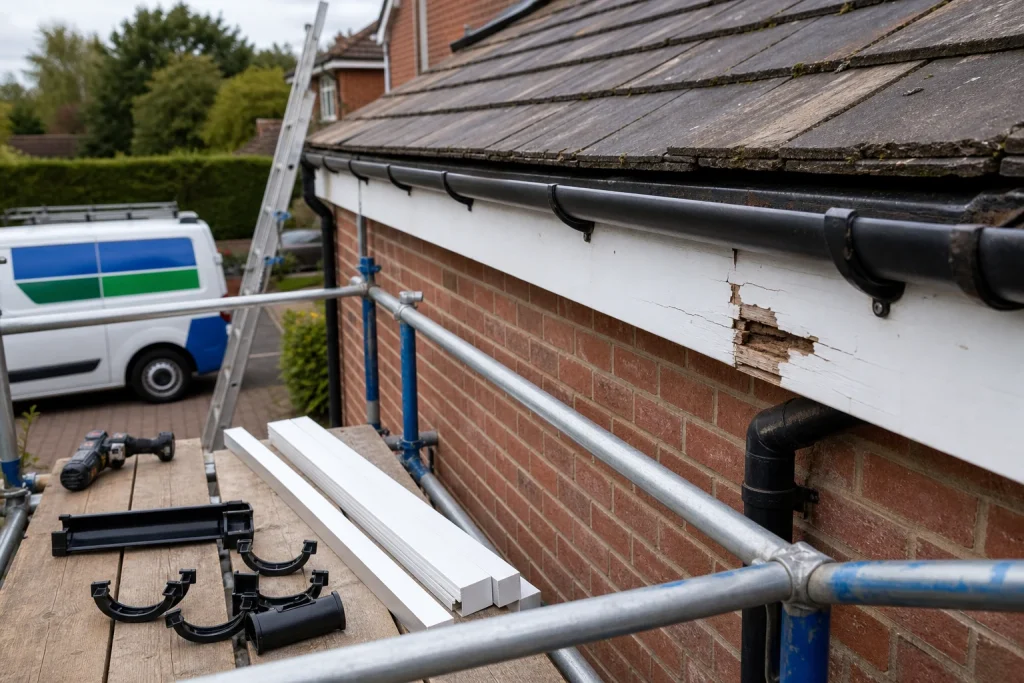
Gutters, fascias and soffits can also play a role. Blocked or leaking gutters may send water back toward the roof edge or into areas that should stay dry. Damaged fascia or soffit boards can allow water to affect timber behind them, especially where roof edges, felt support trays or gutter lines are already under strain. Where the roofline is part of the issue, it may be useful to consider the condition of guttering, soffits and fascias as part of the wider repair picture.
Why indoor signs can be misleading
The first indoor sign of a roof leak is often a stain, bubbling paint, damp plaster, a musty smell or water dripping during heavy rain. These signs are important, but they are clues rather than a full diagnosis.
A ceiling stain can spread out from the point where water finally reached the plasterboard, not from the place where it entered the roof. Insulation can absorb moisture and hold it for a while before releasing it later. This means a leak may appear after the rain has stopped, or only after several wet days. In some cases, the visible patch grows slowly because moisture has been collecting unseen above the ceiling.
Water can also follow pipes, cables, joists or old fixing holes. A drip near a light fitting does not automatically mean the roof defect is directly above that fitting. It may simply be the easiest place for water to escape. Electrical fittings and damp should always be treated with care, and the area should be made safe before investigation continues.
Another complication is that more than one roof issue can exist at the same time. A slipped tile may be obvious, but a nearby flashing fault, blocked gutter or worn membrane may also be contributing. Repairing only the most visible defect can leave the hidden entry point untouched.
If the leak is active and you need immediate guidance, CPS Roofing has a practical guide on what to do when a roof is leaking. Once the urgent situation is under control, the next step is to trace the actual source.
How roofers trace the real source of a leak

Good leak tracing starts with listening to what has happened. When did the leak first appear? Does it happen only in heavy rain, when wind comes from a particular direction, or after long periods of wet weather? Has there been recent roof work, gutter cleaning, storm damage or internal staining in a similar place before?
From there, the roof and surrounding details can be inspected methodically. A roofer may look at the visible roof covering, flashings, ridge and verge details, valleys, gutters, outlets, penetrations and roof edges. Inside the roof space, they may look for water marks on timbers, damp insulation, staining on underlay, daylight through gaps or signs that water has been following a rafter or joist.
The key is to connect the evidence. A damp patch indoors, a stain on a rafter and a weakness in the roof covering may together reveal the route. Without that joined up view, it is easy to repair the wrong area.
Some leaks are straightforward once the roof is inspected. Others require patient checking, especially where earlier patch repairs, ageing materials or difficult roof junctions are involved. The best outcome is a repair that addresses the entry point and any affected detailing around it, not just a temporary cover over the symptom.
This is also where experience matters. Roofs rarely fail in only one textbook way. The same indoor mark can be caused by a tile issue, a flashing issue, a flat roof edge, a gutter fault or a hidden defect in the roof structure. A professional inspection helps separate likely causes from guesswork.
Why delaying leak tracing can make repairs more involved
A small leak can look harmless at first, especially if it only appears during certain weather. The problem is that water rarely improves building materials over time. Repeated moisture can stain plaster, damage decoration, affect insulation and encourage timber to stay damp.
Delays can also make the original route harder to read. Once water has spread, dried, returned and moved again, the signs inside the roof space can become less clear. What started as one weak point may begin to affect nearby materials, making the repair more complex than it needed to be.
Prompt inspection does not mean panic. It simply means giving the roof the best chance of being repaired before hidden moisture causes wider damage. CPS Roofing explains this in more detail in its guide to the cost of delaying roof repairs.
It is also worth avoiding quick assumptions. Replacing a stained ceiling, painting over a mark or sealing a visible gap without checking the roof can hide the evidence for a while, but it will not stop water if the real entry point remains open. A tidy, focused repair starts with a clear diagnosis.
What homeowners can check before calling a roofer

You do not need to climb onto the roof to gather useful information. In fact, staying safely on the ground is the right approach. A few simple observations can help a roofer understand the pattern of the leak.
- Note when the leak appears, such as during heavy rain, light rain, wind driven rain or after several wet days.
- Take photographs of indoor staining or drips, especially before the area dries.
- Check whether gutters are overflowing during rain, but only from a safe position.
- Look for obvious slipped tiles, damaged roof edges or debris in gutters from ground level.
- Avoid entering a roof space if there is active dripping near electrics or if access is unsafe.
Try not to disturb the area more than necessary. Moving insulation, lifting boards or poking at damp plaster can make the evidence harder to interpret and may expose you to hazards. If water is coming through, contain it safely, protect belongings where possible and arrange a roof inspection.
Useful information helps, but it does not replace a proper assessment. The real value of professional repair is in tracing the leak back to its source, identifying any related defects and carrying out work that suits the roof type and condition.
- A visible damp patch is often the end of the leak path, not the entry point.
- Water can travel along underlay, timbers, insulation, membranes, gutters and roof edges before appearing indoors.
- Pitched roofs, flat roofs and roofline details can all create hidden routes for rainwater.
- Professional leak tracing helps avoid repairing the symptom while missing the actual source.
- Prompt roof inspection can reduce the chance of wider moisture damage.
Frequently asked questions
Can a roof leak appear in a room that is not directly under the damaged area?
Yes. Water can travel along roof materials, timbers, insulation or ceiling surfaces before it becomes visible. The indoor stain may be some distance from the actual entry point.
Why does my roof only leak during heavy rain or wind?
Some defects only let water in when rain is driven under tiles, against flashings or into roof edges. The direction and force of the weather can change how water enters and travels.
Should I patch the ceiling once the damp mark dries?
It is better to find and repair the source first. Decorating over a dry mark may hide the symptom, but the leak can return if the roof defect has not been fixed.
How do roofers find a hidden roof leak?
Roofers compare indoor signs with roof space evidence and external roof details. They look for water marks, damaged materials, weak junctions, gutter issues and likely routes through the roof structure.
Need help finding the source of a roof leak?
If water is appearing indoors and the source is not obvious, CPS Roofing can inspect the roof, trace the likely route and recommend the right repair.