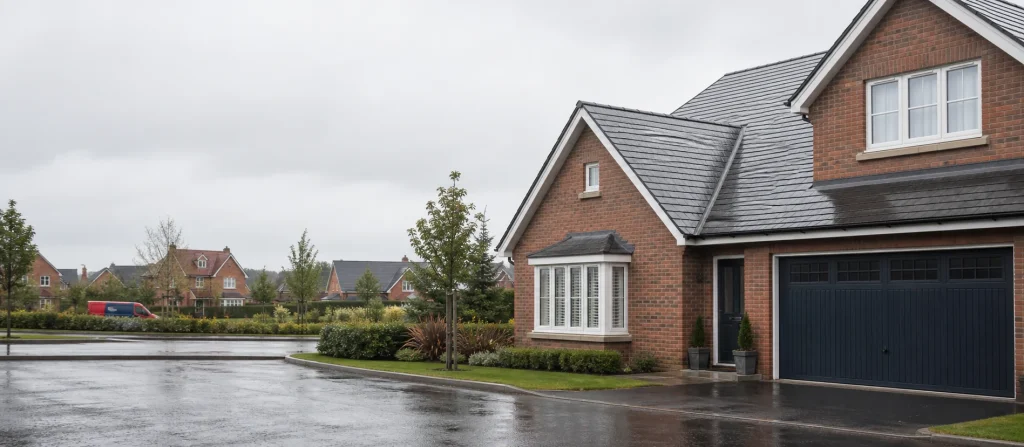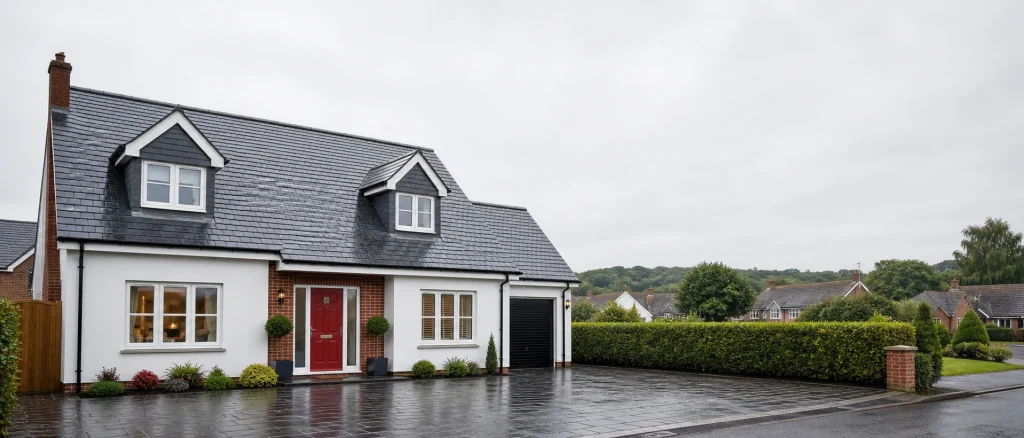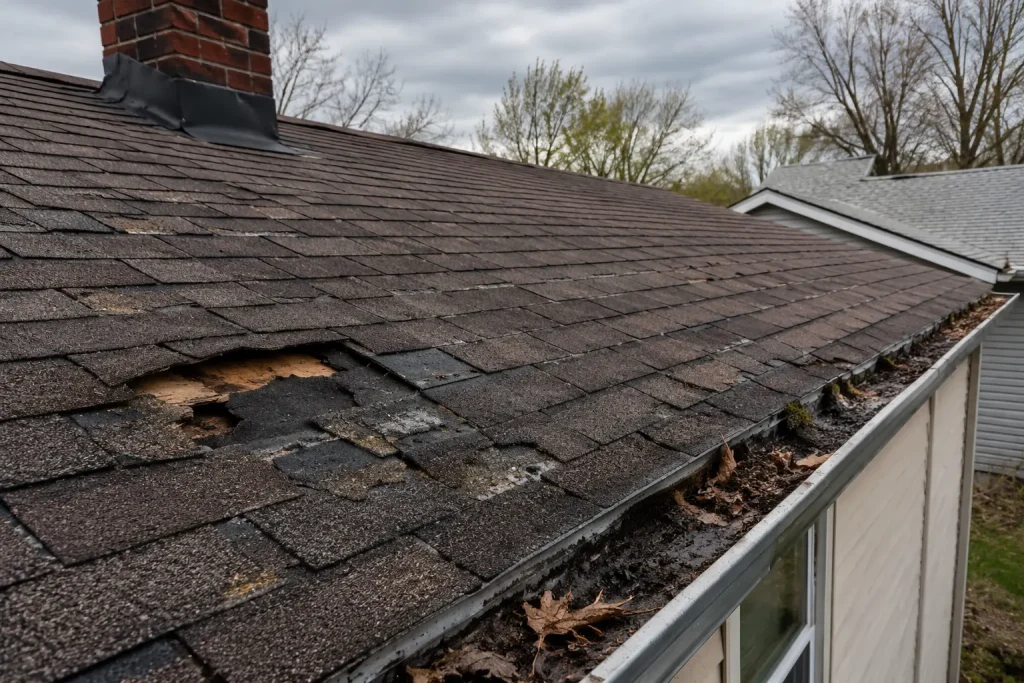
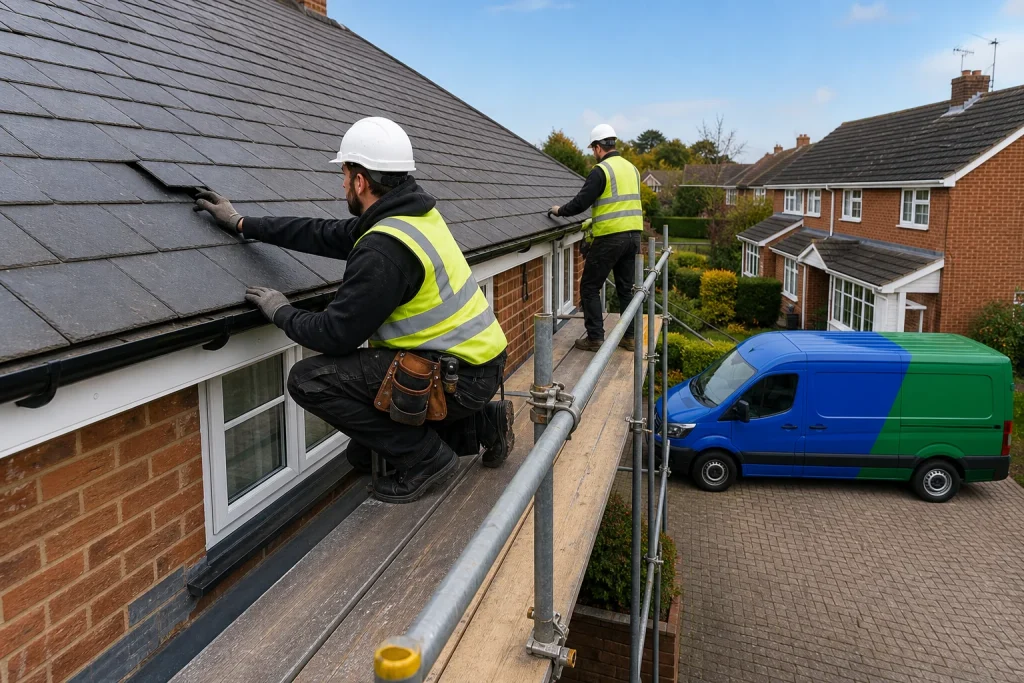
A slipped roof tile or slate can look like a small problem from the ground, but it is often a sign that something has failed in the fixing, batten or surrounding roof covering.
Acting early helps protect the roof structure, insulation and rooms below. Here is what causes tiles to move, what can happen if they are left, and how professional roofers put them right.
What a slipped tile actually means
Roof tiles and slates are designed to overlap in a set pattern, so rain runs down the roof and into the guttering. When one slips, cracks or becomes loose, that overlap is interrupted. The underlay beneath may offer temporary protection, but it is not intended to be the main weatherproof layer.
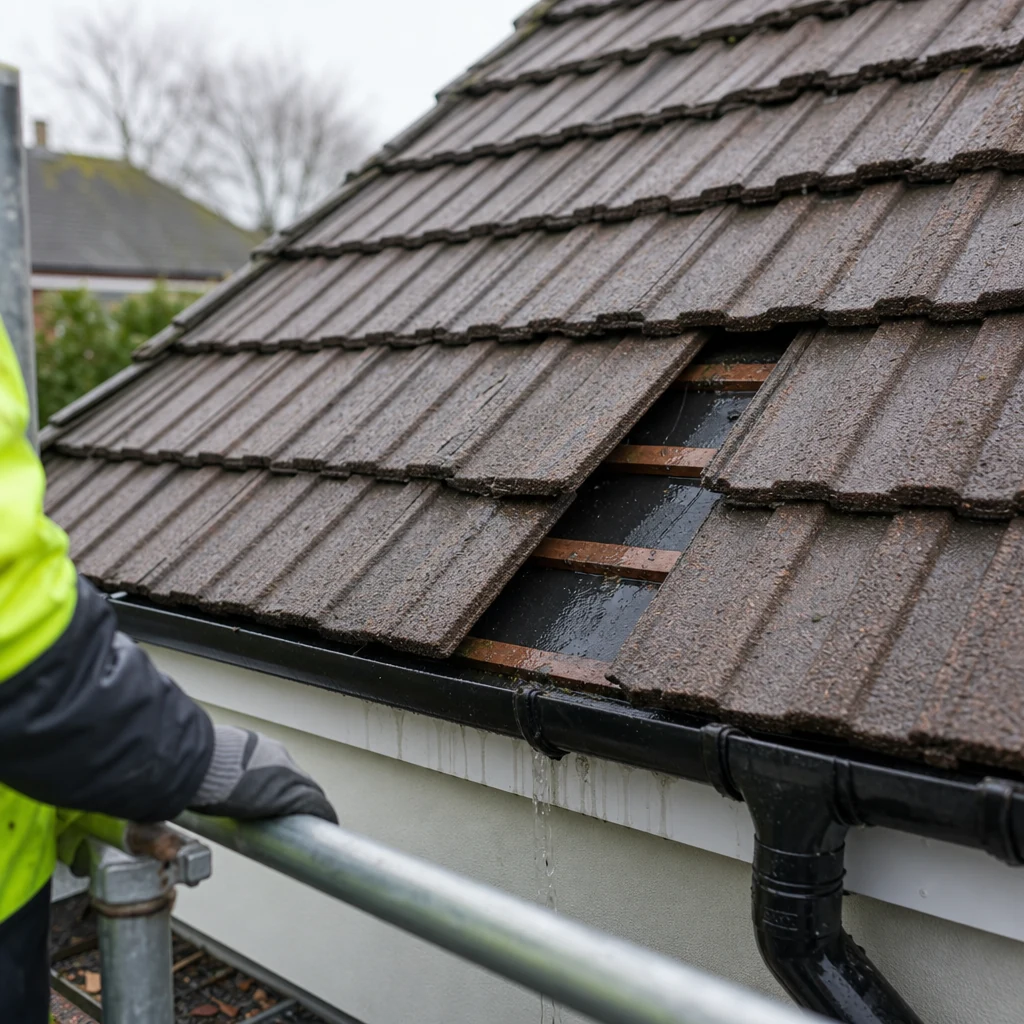
A tile may slip fully out of position, hang lower than the surrounding course, lift at one edge or leave a visible gap. Slates can also drop when their nails corrode or fail. Even if there is no obvious leak inside, the exposed area can allow wind-driven rain to reach parts of the roof that should stay dry.
Common reasons roof tiles and slates slip
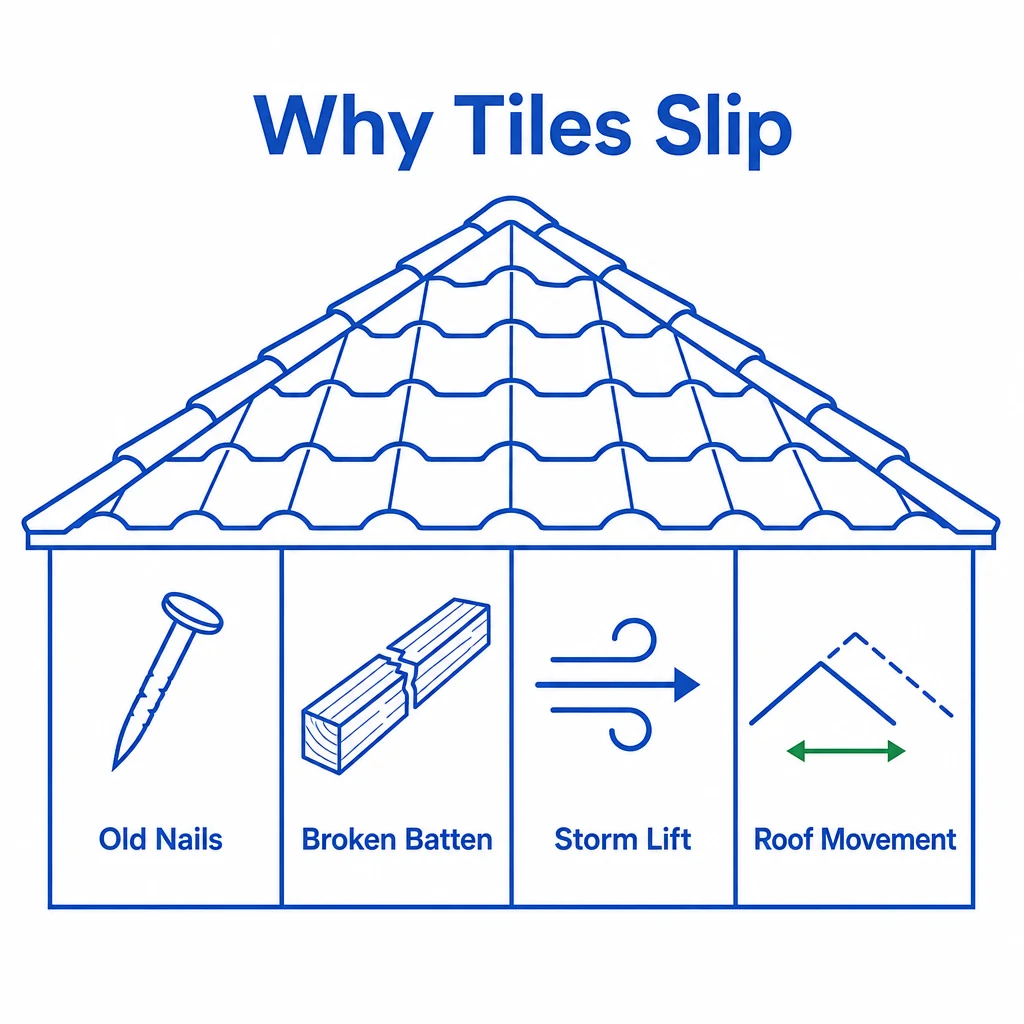
There is rarely one single cause for every slipped tile. A roofer will look at the type of covering, the fixings, the battens and the surrounding area before deciding on the correct repair.
- Failed nails or fixings: Older slate roofs can suffer from nail failure, while tiled roofs may have broken clips, loose fixings or weakened nibs.
- Weather exposure: Strong wind, driving rain and repeated freeze-thaw cycles can loosen vulnerable tiles over time.
- Damaged battens: Tiles are fixed to timber battens. If a batten splits, decays or moves, the tile may no longer be properly supported.
- Impact damage: Fallen branches, debris, ladders or foot traffic can crack tiles or disturb the course.
- Poor previous repairs: A tile that has been pushed back without being correctly fixed can move again quickly.
- Moss and debris: Heavy build-up can hold moisture, block water paths and add pressure around tile edges.
The cause matters because the right fix is not always as simple as replacing one tile. If the surrounding fixings or battens are failing, those need attention too.
The damage a slipped tile can lead to
A missing or displaced tile creates a weak point in the roof covering. Rain may track onto the underlay, battens, rafters or insulation. Over time, this can contribute to damp patches, staining, timber deterioration and reduced insulation performance.
Water can also travel before it shows indoors, so the visible mark on a ceiling may not be directly beneath the slipped tile. This is one reason a careful inspection is important. Roofers look for the route water is likely to take, not just the first visible gap.
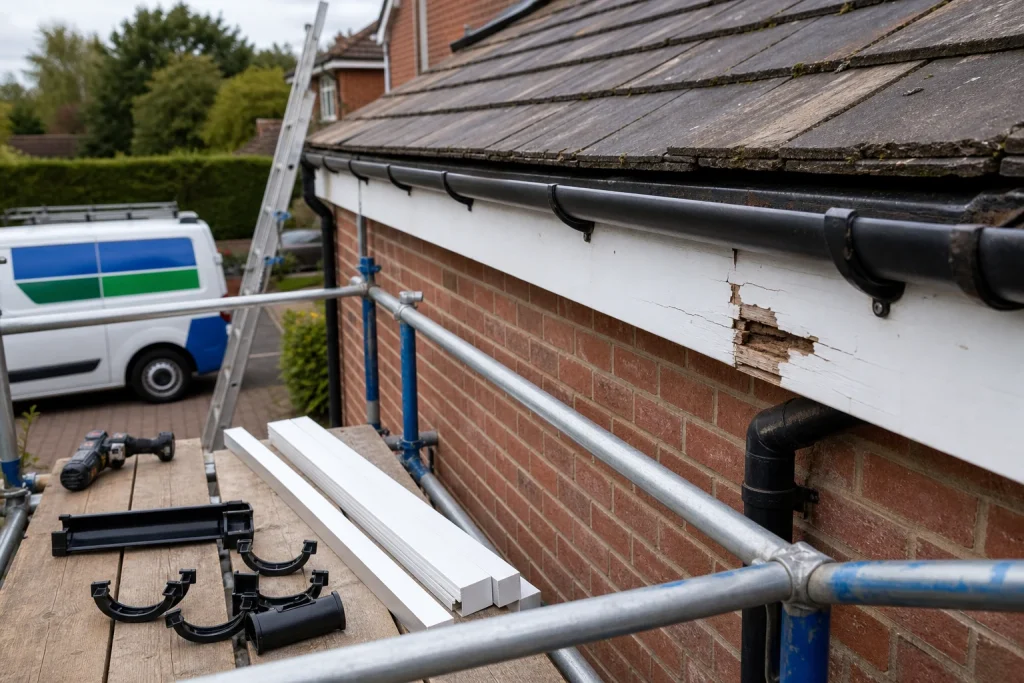
Slipped tiles can also affect nearby parts of the roof. A loose tile may rattle in the wind, damage adjacent tiles or slide into the gutter. If gutters become blocked or damaged, rainwater may run onto fascias, soffits or walls. Where roof edge components are affected, it may be sensible to check guttering, soffits and fascias at the same time.
How roofers assess the problem safely
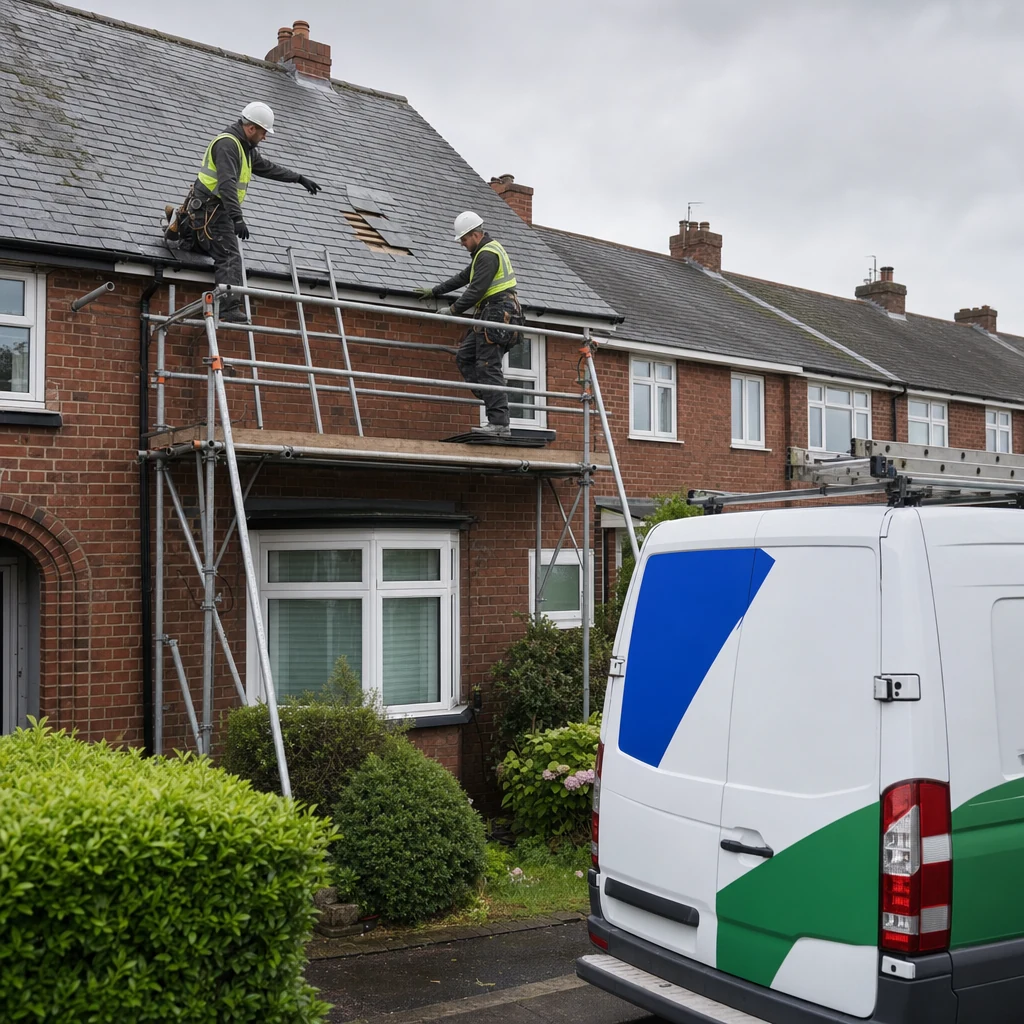
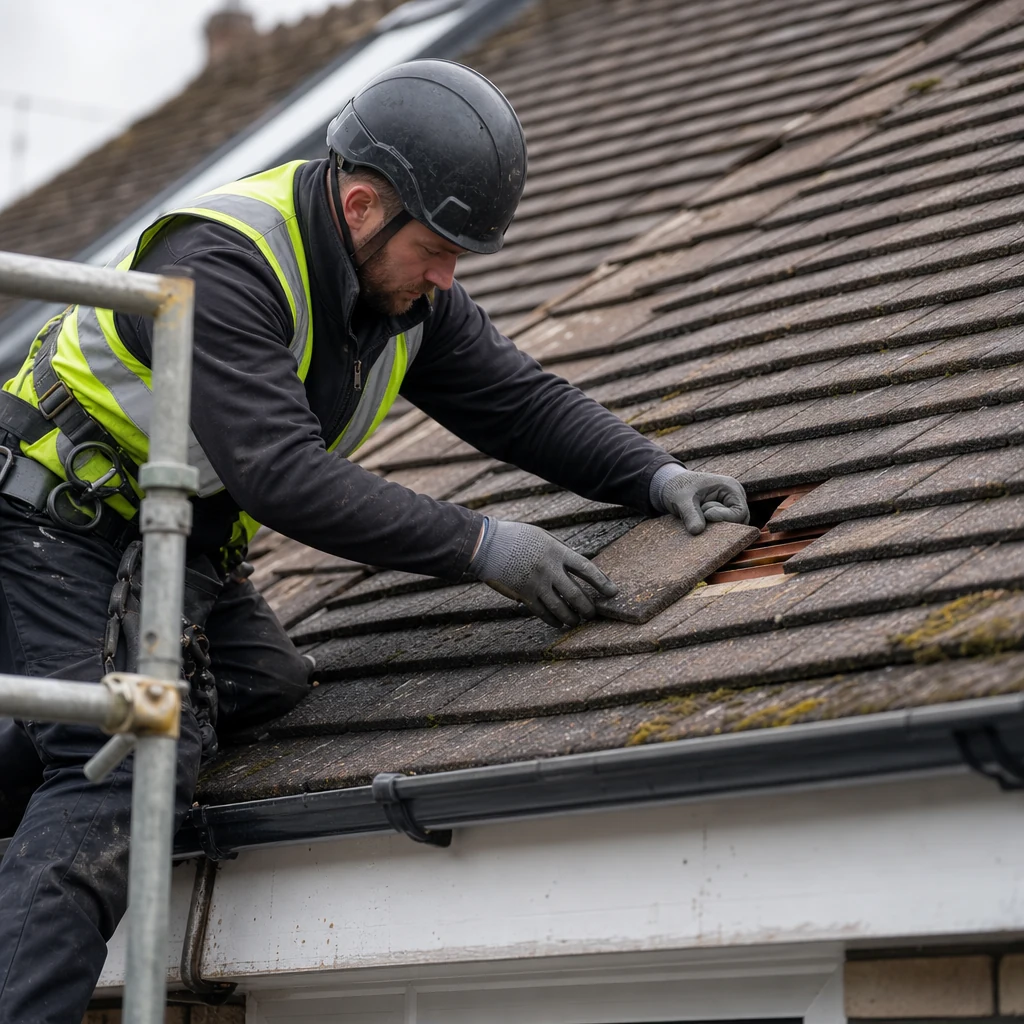
A professional assessment starts with safe access. Depending on the height, pitch and position of the slipped tile, this may involve ladders, roof ladders, access equipment or scaffolding. The aim is to inspect the area properly without damaging more tiles.
Roofers will usually check the slipped tile or slate, the courses above and below, the condition of the battens, the underlay, flashings, valleys and any nearby roof details. They will also look for signs that the same fault could affect other tiles, especially if several have moved in one area.
This careful approach is why a professional roof repair is often the best route. It deals with the cause, restores the correct overlap and helps prevent a repeat issue.
How slipped tiles are repaired
The repair method depends on whether the roof is tiled or slated and what has failed. A sound tile that has simply moved may be reset and refixed. A cracked, broken or heavily weathered tile will usually be replaced with a suitable match where possible.
For slates, the roofer may remove the damaged slate, check the fixing points and fit a replacement using appropriate nails, hooks or other recognised slate fixing methods. For interlocking tiles, the surrounding tiles may need to be lifted carefully so the replacement can be seated and clipped correctly. Plain tiles may require attention to nails, battens and overlap.
If the batten is split or decayed, a proper repair will include replacing or strengthening the affected section rather than fixing back into weak timber. If the underlay has been torn, it may be patched or detailed so water can still shed safely beneath the roof covering.
Once repaired, the roofer will check the alignment, overlap and water path. Any loose fragments should be removed, and the area should be left tidy and secure.
When a slipped tile suggests a wider issue
Many slipped tiles are isolated and can be repaired neatly. However, repeated slips, widespread cracked tiles, failing battens or large areas of nail failure can point to a broader problem with the roof covering.
In that situation, a roofer may recommend repairing a larger section rather than treating each tile as a separate fault. The benefit is that the repair is planned around the condition of the roof, not just the most obvious symptom. A straightforward inspection can help you understand whether the issue is localised or part of normal roof ageing.
- A slipped tile breaks the roof’s protective overlap, even if there is no visible indoor leak yet.
- Common causes include failed fixings, damaged battens, weather exposure, impact and poor previous repairs.
- Professional roofers repair the cause as well as the tile, helping reduce the chance of repeat movement.
- Guttering, fascias and soffits may also need checking if loose tiles have affected roof edges.
Frequently asked questions
Can I just push a slipped tile back myself?
It is not recommended. Roof access is hazardous, and a tile that is only pushed back may not be fixed correctly. If the batten, nail or clip has failed, the tile can move again.
Is one slipped tile urgent?
It is worth arranging an inspection promptly. One slipped tile can expose underlay and timber to rain, and wind can make the opening worse.
Can a roofer match my existing tiles or slates?
In many cases, a close match can be found using suitable new or reclaimed materials. The exact approach depends on the age, profile and condition of the roof covering.
Does a slipped tile mean I need a new roof?
Not usually. Many slipped tiles can be repaired as a focused job. A roofer will only suggest wider work if the surrounding roof condition makes it necessary.
Need help with a slipped roof tile?
CPS Roofing can assess the problem, explain the cause and carry out a tidy, professional repair.