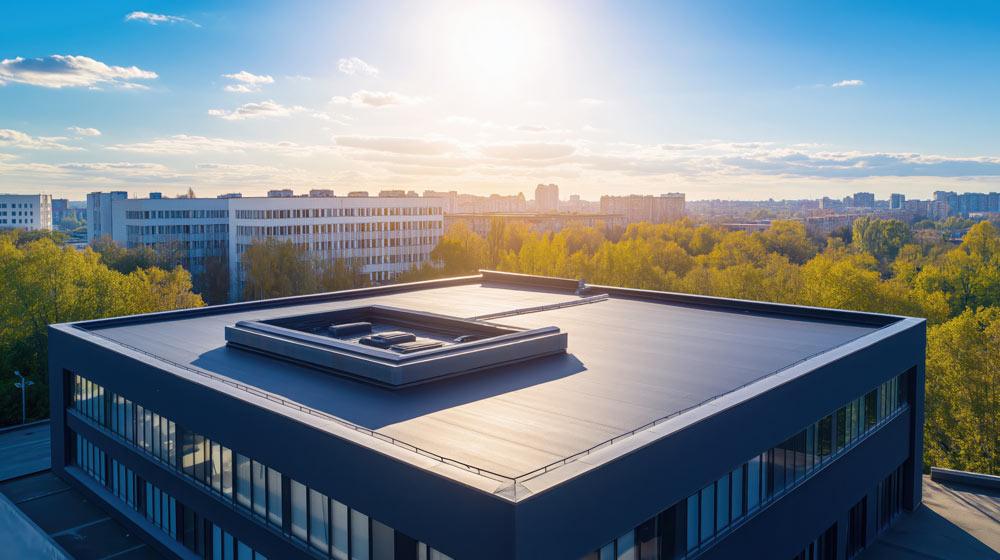
Flat roofs are a popular choice for many homeowners and commercial property owners. They offer a sleek, modern look, are ideal for extensions and outbuildings, and can provide usable space for roof terraces or solar panels. But when it comes to choosing the right material for a flat roof, the decision can be daunting.
Two of the most widely used options today are EPDM (Ethylene Propylene Diene Monomer) rubber roofing and GRP (Glass Reinforced Plastic), also known as fibreglass roofing. Both have strong reputations, but they differ in composition, installation, durability, and suitability for specific applications.
In this article, we’ll explore what each material is, its benefits, its drawbacks, and how to choose the right one for your project.
What is EPDM Roofing?
EPDM is a synthetic rubber membrane that has been used in roofing for over 50 years. It is manufactured from ethylene, propylene, and diene monomer—giving it flexibility, resilience, and excellent resistance to weathering.
It typically comes in large sheets, meaning fewer joins and seams, which reduces the potential for leaks. EPDM is installed by adhering the sheet to a prepared roof deck using either adhesive or mechanical fixings.
Best suited for: Large, simple flat roof areas with minimal obstructions.
What is GRP Roofing?
GRP, or Glass Reinforced Plastic, is a composite material made from polyester resin reinforced with fine glass fibres. Once cured, it forms a strong, seamless, and fully waterproof surface.
GRP roofs are installed in layers—starting with a base layer, adding the fibreglass matting, and finishing with a coloured topcoat. The result is a rigid, durable surface that can be moulded to complex shapes.
Best suited for: Smaller roofs, intricate shapes, or areas where a highly aesthetic finish is important.
Pros and Cons of EPDM Roofing
Pros
-
Longevity – EPDM roofs can last 25–30 years or more with minimal maintenance.
-
Flexibility – The rubber membrane can expand and contract with temperature changes without cracking.
-
Fewer Seams – Large sheets mean fewer joints, reducing leak potential.
-
Cost-Effective – Generally less expensive to install than GRP for large areas.
-
Eco-Friendly – EPDM is recyclable and has a relatively low environmental impact during manufacture.
Cons
-
Aesthetics – Usually only available in black, which may not suit all properties.
-
Vulnerability to Punctures – Sharp objects or heavy foot traffic can damage the membrane.
-
Adhesive Dependent – Poor installation or adhesive failure can lead to issues.
-
Not Ideal for Complex Shapes – Best suited to simple, flat surfaces.
Pros and Cons of GRP Roofing
Pros
-
Seamless Finish – No joints or seams, reducing the risk of water ingress.
-
Aesthetic Appeal – Available in different colours for a modern, clean appearance.
-
Durability – Resistant to impact, corrosion, and extreme weather.
-
Complex Shapes – Can be moulded around corners, edges, and intricate details.
-
Low Maintenance – Occasional cleaning is usually enough to keep it in top condition.
Cons
-
Cost – Typically more expensive per square metre than EPDM, especially for large roofs.
-
Rigid Structure – May crack if the roof deck moves or flexes significantly.
-
Weather Dependent Installation – Cannot be installed in wet or very cold conditions.
-
Labour Intensive – Requires more installation time and expertise.
EPDM vs GRP: Key Comparisons
| Feature | EPDM Rubber Roofing | GRP Fibreglass Roofing |
|---|---|---|
| Lifespan | 25–30 years+ | 25–30 years+ |
| Installation Speed | Fast for large areas | Slower, more detailed work |
| Appearance | Black, plain finish | Coloured, smooth finish |
| Flexibility | Highly flexible | Rigid once cured |
| Best For | Large, simple roofs | Small/complex roofs |
| Cost | Generally lower | Higher per m² |
| Seam Risk | Low, but some joins remain | None – fully seamless |
Choosing the Right Material for Your Roof
The choice between EPDM and GRP largely depends on your priorities:
-
For large, simple roofs on a budget: EPDM offers excellent durability and value.
-
For smaller roofs or complex shapes: GRP provides a flawless, customisable finish.
-
For highly visible areas: GRP’s colour options and smooth surface often look more modern and appealing.
-
For maximum speed of installation: EPDM is generally quicker to fit, reducing labour costs.
Also consider:
-
Foot traffic: If you plan to walk on the roof (e.g., for maintenance), GRP is more resistant to scuffs and punctures.
-
Climate: Both materials perform well in UK conditions, but EPDM’s flexibility can handle temperature swings particularly well.
-
Budget: EPDM tends to be more cost-effective, especially for larger projects.
Maintenance Tips for EPDM and GRP Roofs
EPDM
-
Avoid dragging sharp tools or heavy equipment across the surface.
-
Clean periodically to prevent moss or debris buildup.
-
Check seams and flashings during annual inspections.
GRP
-
Inspect for cracks or chips in the topcoat, especially after impact.
-
Keep gutters clear to prevent standing water.
-
Avoid painting over the surface unless using compatible materials.
Common Myths About Flat Roof Materials
“Flat roofs always leak.”
Modern EPDM and GRP systems, when professionally installed, are highly watertight and long-lasting.
“You can’t walk on a flat roof.”
GRP is especially tough underfoot, and EPDM can handle occasional traffic with protective measures.
“Rubber roofs look cheap.”
While EPDM is plainer in appearance, it delivers exceptional performance—especially for hidden or non-visible roofs.
Final Thoughts
Both EPDM and GRP are excellent flat roofing materials when installed correctly, offering decades of protection for your home or business. The best choice depends on the size, complexity, budget, and visual requirements of your project.
If you’re unsure which is right for you, a professional roofing contractor can assess your property, explain the options, and provide a tailored quote.
At CPS Roofing & Building, we have extensive experience installing both EPDM and GRP roofs across Cornwall. Our skilled team ensures each project is completed to the highest standard, giving you a roof that looks great and performs flawlessly for decades.