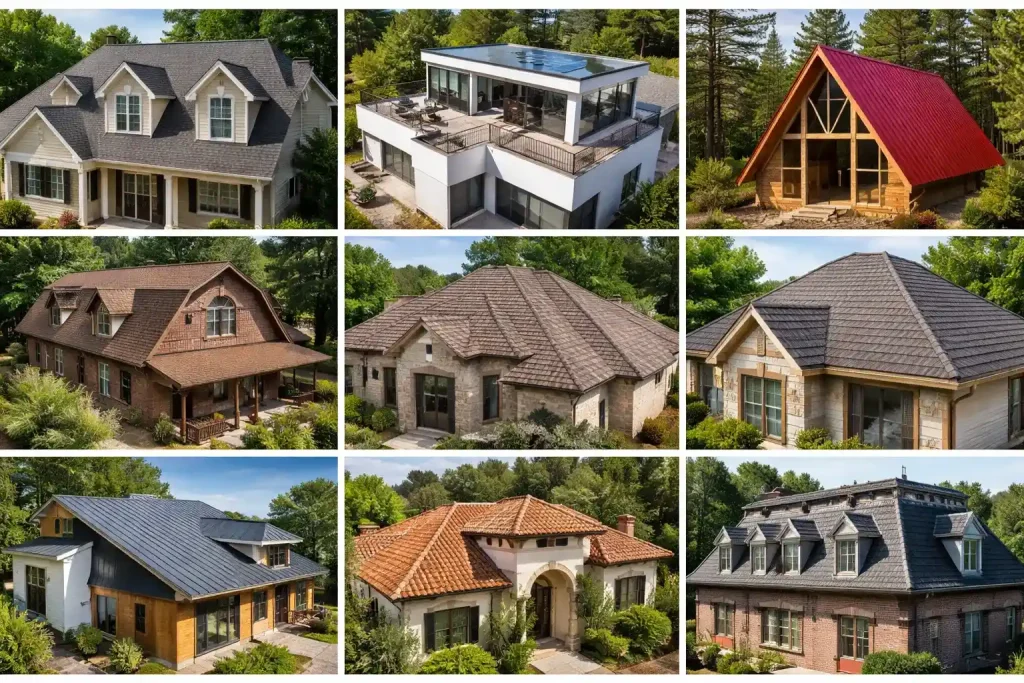
Choosing between the different types of roofs can feel confusing, especially when each option affects how your home looks, performs, and lasts over time. We often speak to homeowners who are unsure which style suits their property, budget, or the UK climate.
In this guide, we explain the various roof types in simple terms. You’ll learn what each roof offers, where it works best, and how to decide what’s right for your home.
What do we mean by roof types?
When we talk about roof types, we are referring to the shape and structure of a roof. This is different from materials like slate or tiles.
The structure affects:
- How well does rainwater drain
- How much space do you get inside
- How strong the roof is in the wind
- The overall look of your home
Understanding this helps you avoid costly mistakes later.
Why choosing the right roof type matters
Many homeowners focus only on appearance, but the wrong choice can lead to:
- Water pooling and leaks
- Poor insulation and higher energy bills
- Limited loft or storage space
- Higher long-term maintenance costs
A well-chosen roof strikes a balance between design, durability, and practicality.
The most common roof types in the UK
Gable roof (the classic choice)
This is one of the most common roof types for houses in the UK. It has two sloping sides that meet in the middle.
Why we recommend it:
- Excellent water drainage
- Cost-effective to build
- Works well with most home styles
Best for: Traditional homes and new builds
Hip roof (strong and stable)
A hip roof slopes on all four sides, making it more stable in strong winds.
Key benefits:
- Better wind resistance
- Clean, modern appearance
- Long-lasting structure
Things to consider:
It costs more than a gable roof due to its complexity.
Flat roof (modern and practical)
Flat roofs are popular in extensions and modern designs. They are not completely flat but have a slight slope for drainage.
Why people choose it:
- Lower initial cost
- Ideal for extensions or garages
- Can be used for roof terraces
Important: Regular maintenance is essential. If you ever notice issues, timely help from our roof repair specialists can prevent bigger problems.
Mansard roof (extra space inside)
This design has two slopes on each side, with the lower slope being steeper.
Advantages:
- Creates more usable loft space
- Ideal for conversions
- Adds property value
Best for: Urban homes where space is limited
Gambrel roof (barn-style design)
Often seen on barns, this roof has two slopes on each side.
Why it stands out:
- Maximises internal space
- Distinctive appearance
- Good for loft storage
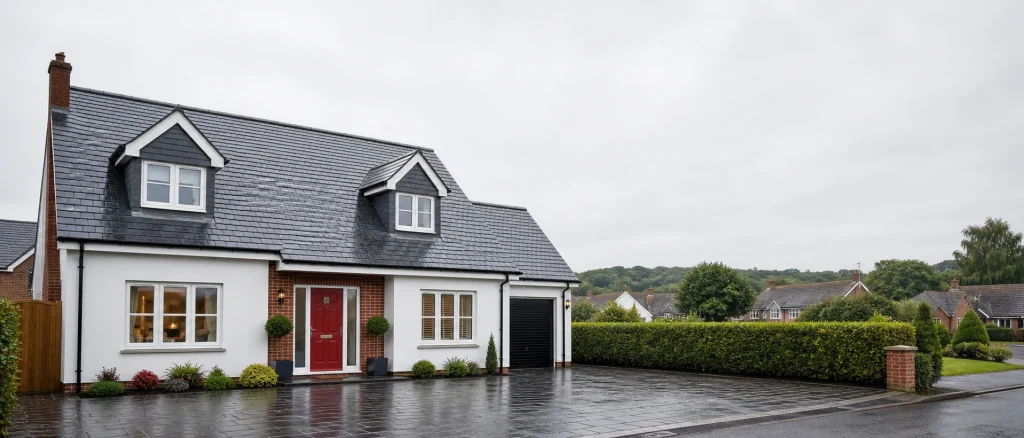
Dormer roof (adds light and space)
A dormer is not a full roof type but an addition that extends out from a pitched roof.
Benefits:
- Brings in natural light
- Increases headroom
- Perfect for loft conversions
Skillion (shed) roof
A single sloping surface, often used in modern homes.
Why it’s popular:
- Simple design
- Great for solar panels
- Contemporary look
Butterfly roof (modern design)
This inverted roof slopes inward, creating a V shape.
Best features:
- Unique appearance
- Allows large windows
- Good for rainwater collection
Drawback: Requires careful drainage design.
Pitched vs flat roof types: what’s the difference?
| Feature | Pitched Roof | Flat Roof |
| Drainage | Excellent | Moderate |
| Cost | Higher | Lower |
| Maintenance | Lower | Higher |
| Lifespan | Longer | Shorter (if not maintained) |
| Space | Loft space available |
Limited |
For most UK homes, pitched roof types remain the most reliable due to heavy rainfall. 
How to choose the best roof type for your home
We always guide homeowners through a simple process:
- Consider your property style
Traditional homes suit gable or hip roofs. Modern builds can explore flat or butterfly designs.
- Think about weather conditions
UK weather demands strong drainage and durability.
- Plan your space needs
If you need extra room, consider mansard or dormer options.
- Set a realistic budget
Some roof design types cost more due to the structure and materials.
- Factor in maintenance
Flat roofs may need more regular checks than pitched roofs.
If you’re unsure, our team can help you explore the best option through our roofing services.
Real-life example
We recently worked with a homeowner who wanted to extend their property. They were choosing between a flat roof and a pitched design.
After reviewing drainage, insulation, and long-term costs, we recommended a low-pitched roof with a dormer. This gave them:
- Better insulation
- More usable space
- Improved property value
The result was practical and visually balanced.
Common mistakes to avoid
Many issues we fix come from early decisions. Here are mistakes to watch out for:
- Choosing style over function
- Ignoring drainage requirements
- Underestimating maintenance needs
- Not planning for future extensions
- Hiring inexperienced contractors
Avoiding these can save you significant time and money.
Final thoughts
Understanding the different types of roofs helps you make a confident and informed decision. The right choice improves your home’s comfort, durability, and value for years to come.
At CPS Roofing & Building, we work closely with homeowners to design, install, and maintain roofs that truly suit their needs. Whether you’re planning a new roof, upgrading your property, or dealing with wear and tear, we offer reliable support across everything from full installations to guttering, soffits & fascias.
If you’re considering your options or need honest advice, feel free to explore our services or get in touch. We’re always happy to help you choose a roof that works in real life, not just on paper.