
A small roof leak can be confusing. One day there is a damp patch, a drip or a stain on the ceiling, then after a spell of dry weather it seems to disappear.
It is natural to hope the problem has solved itself, but roofs rarely repair themselves. A leak can appear to dry out while moisture, damaged materials or a small entry point remain hidden above the ceiling.
Why a roof leak can seem to stop
A roof leak is often linked to certain weather conditions rather than constant rainfall. Water may only enter when rain is driven by wind from a particular direction, when rainfall is heavy enough to overwhelm a gutter, or when water sits on a flat roof for longer than usual.
That means the leak may vanish during lighter rain or dry weather. The ceiling can feel dry, the drip can stop, and the stain may not spread for a while. Unfortunately, this does not prove the roof is sound again. It only shows that water is not currently reaching the visible point inside the property.
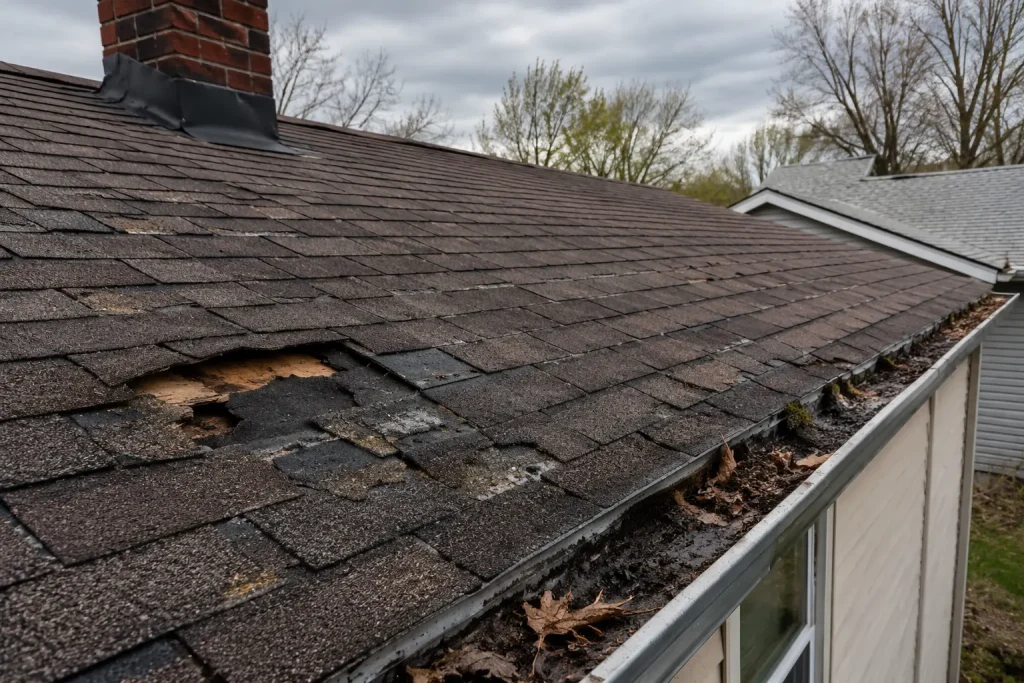
Small gaps around flashing, cracked mortar, slipped tiles, worn flat roofing details, damaged felt and blocked drainage can all leak intermittently. Some faults only show when water is pushed beneath a lap or into a joint. Others appear when gutters overflow and send water back towards roof edges, fascias or wall heads.
This is why a leak that seems minor deserves proper attention. If water has found a route in once, there is usually a reason. The sensible question is not whether the damp patch has dried, but what allowed the water in and whether that route is still open.
What may still be wet after the room looks dry
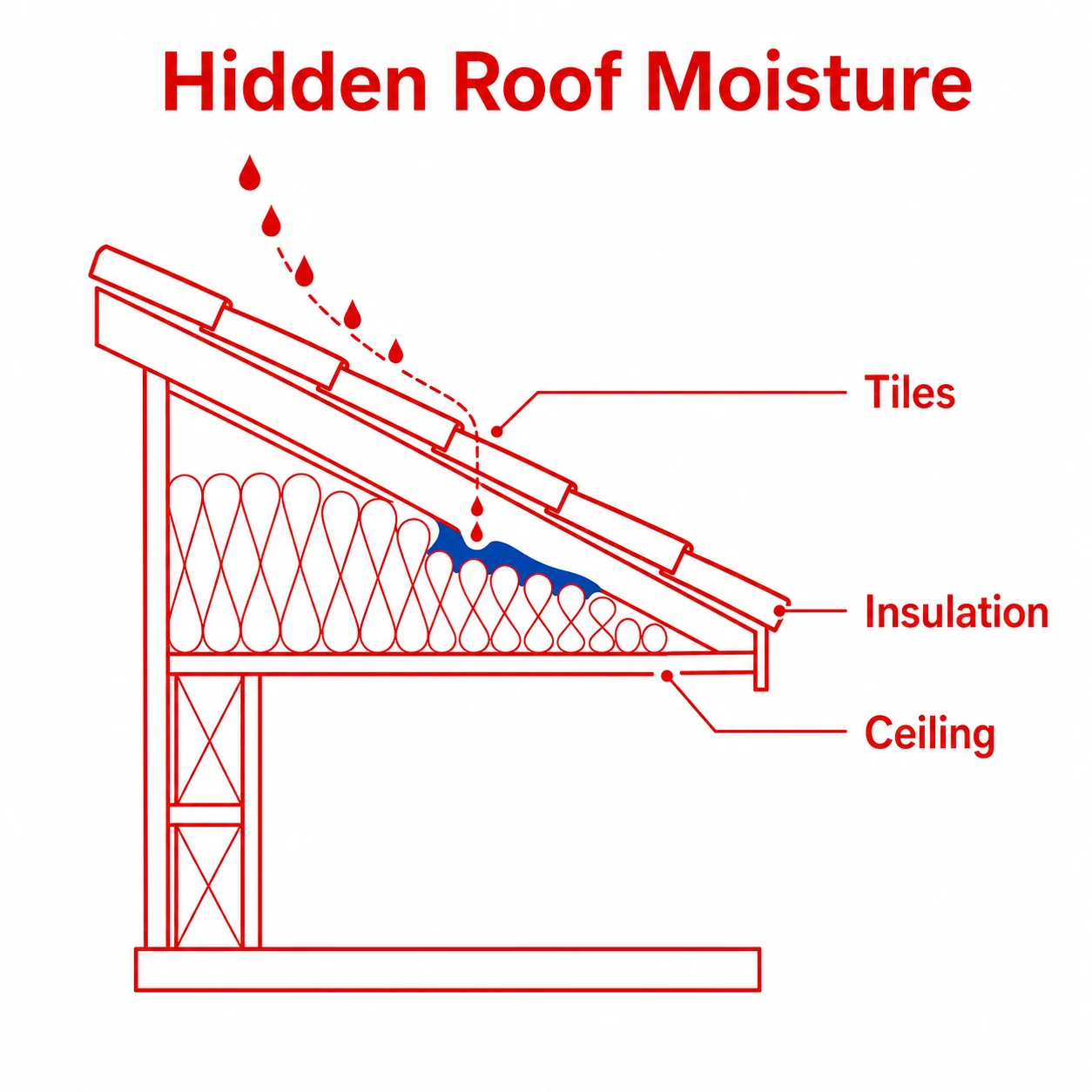
The visible part of a leak is often only the final sign. Before water marks a ceiling or drips into a room, it may have travelled through layers of the roof structure and surrounding materials.
Moisture can sit in insulation, roof timbers, plasterboard, underlay, felt, battens or small voids where air movement is limited. These areas can take much longer to dry than the room below. In some cases, the surface stain looks stable while hidden materials remain damp.
That matters because trapped moisture can lead to staining, mould growth, timber decay, damaged plaster, failed decoration and a gradual weakening of roof materials. It can also make the next leak appear worse, because insulation or plasterboard that has already absorbed water may not cope well with another spell of rain.
Flat roofs need particular care because water can track between layers before it appears inside. Pitched roofs can be just as misleading, especially where felt has aged, tiles have moved, or flashing is letting water pass behind the visible covering. A roofer can inspect the roof covering, roofline, drainage and likely water paths instead of relying only on what can be seen from inside.
Common reasons small leaks come and go
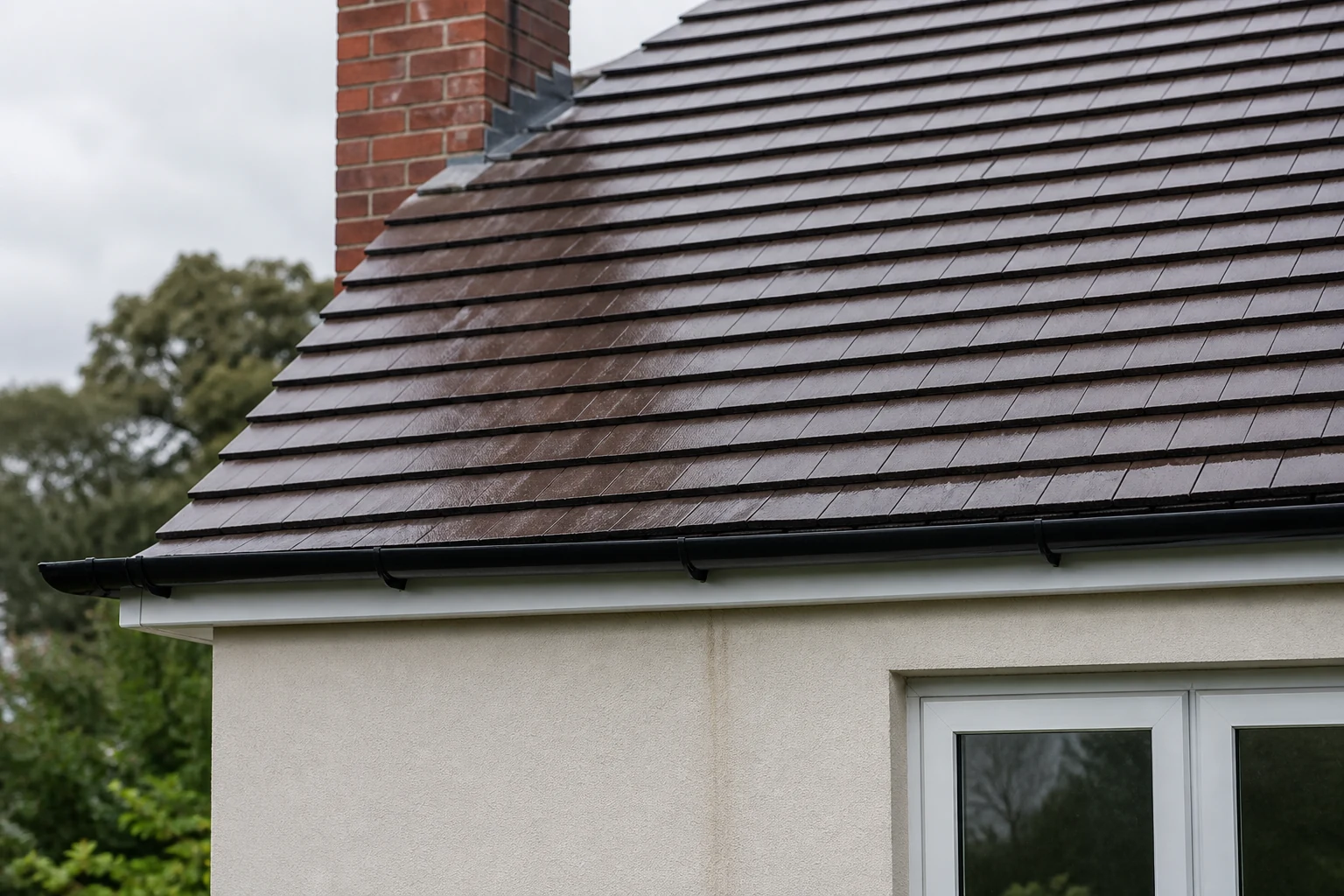
Intermittent leaks can come from several parts of a roof. A slipped or cracked tile may only leak when water reaches it at the right angle. A small split in a flat roofing membrane may only become obvious when water ponds. A flashing detail may hold up in ordinary rain but fail during stronger wind.
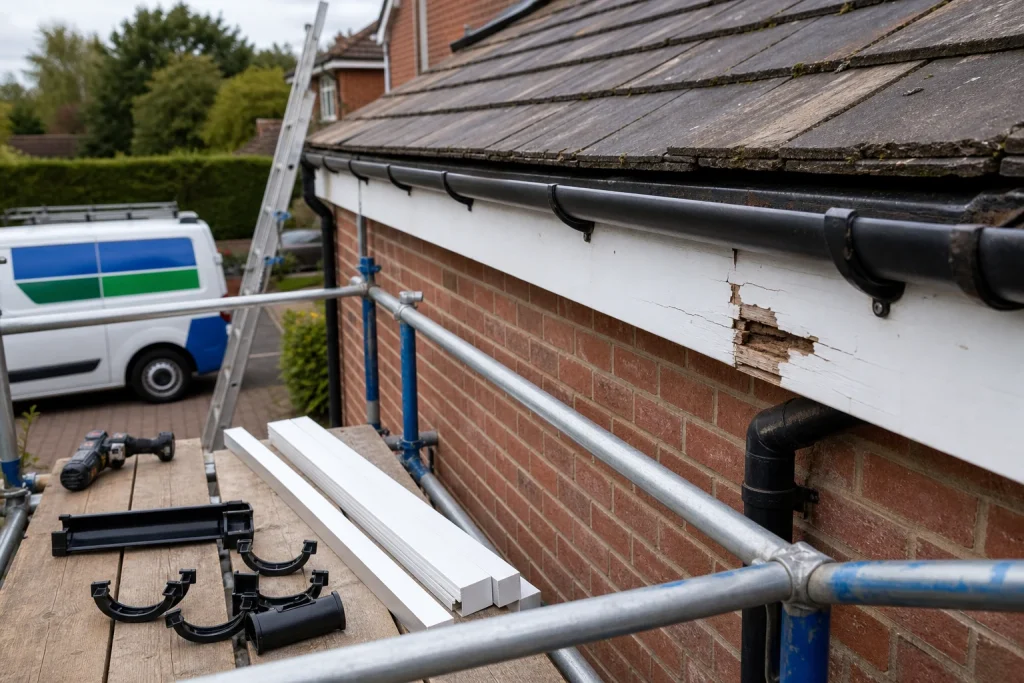
Gutters are another common cause of misleading leaks. If a gutter is blocked, loose or out of line, water can spill back towards the property instead of draining away cleanly. Fascias and soffits can also affect how water behaves at the roof edge, especially when fixings have loosened or timber has deteriorated. CPS Roofing has a useful guide on how damaged fascias can pull gutters out of line, which explains why the roofline should be checked as part of the wider picture.
Another reason leaks appear to stop is that water can travel. The damp patch inside may not be directly below the fault outside. Water can run along felt, rafters, pipework or ceiling voids before showing itself somewhere else. If the position of the stain seems odd, it may help to understand why roof leaks can show up far from the source.
Seasonal movement can also play a part. Roofing materials expand and contract with temperature changes. A small gap may open during one set of conditions and appear tighter during another. That does not make the roof reliable. It makes the leak harder to predict.
Why waiting can make repairs more involved
It is easy to delay action when the weather improves and the ceiling looks dry. The risk is that the cause of the leak remains in place, quietly allowing more water in during the next spell of bad weather.
A prompt inspection can often identify a localised issue before it affects surrounding materials. A roofer may find a displaced tile, a failed flashing joint, a small membrane defect, loose verge detail, cracked pointing, blocked outlet or roofline problem. Dealing with the cause early helps protect the rest of the roof and the rooms below.
Waiting gives moisture more time to spread. Timber, insulation and plaster can all suffer when leaks repeat. Decoration may need attention again and again if the roof is not made watertight first. The roof covering can also become harder to assess if staining, rot or repeated water paths begin to overlap.
This does not mean every small leak turns into a major problem overnight. It means a leak is evidence that the roof has lost some of its protection. A professional assessment gives you a clear view of what has happened, what needs repairing and what can be monitored.
For a broader look at the impact of putting problems off, CPS Roofing has written about the real cost of delaying roof repairs.
What a roofer will usually check

A good roof inspection is about following evidence, not guessing. The roofer will usually look at the visible damp area, the roof space where accessible, the external roof covering, roof edges, flashings, valleys, ridges, gutters and nearby penetrations such as vents or pipes.
On a pitched roof, they may check for slipped, cracked or missing tiles, damaged underlay, failing mortar, loose leadwork, blocked valleys and signs that water has been driven beneath the covering. On a flat roof, they may look for splits, blistering, open laps, ponding, worn edges, blocked outlets and details around upstands.
They may also consider whether the leak is linked to condensation rather than rainwater. Condensation can cause staining and dampness, but it needs a different solution. This is another reason not to rely only on the fact that a patch has dried. The cause matters.
If rain is actively entering the property, temporary protection may be needed inside while the roof is assessed. For practical immediate guidance, CPS Roofing has a separate article on what to do when a roof is leaking. Once the situation is stable, the important next step is to find and repair the fault properly.
When to arrange a roof repair assessment

You should arrange an assessment if you have seen a drip, damp patch, brown stain, bubbling paint, musty smell, wet insulation, daylight through the roof space, slipped tiles, damaged flashing or overflowing gutters near the affected area.
It is also worth getting the roof checked if the leak only happened once. A single leak can be enough to show that water has found a weakness. The next rainfall may not follow the same pattern, but the underlying problem can still be present.
A roof repair does not have to mean a large project. Many issues are localised and can be dealt with neatly when they are found early. The aim is to restore the roof’s protection, reduce the risk of hidden damp and give you confidence that the problem has been properly understood.
If you suspect a leak has dried out without being fixed, CPS Roofing can inspect the roof and advise on the right next step. Their professional roof repairs service covers the faults that commonly allow water into homes and small buildings, including tiles, flat roofing, flashing, gutters and roofline details.
- A roof leak can appear to stop when the weather changes, even if the fault is still present.
- Ceilings can dry faster than insulation, timber, felt, plasterboard or hidden roof spaces.
- Intermittent leaks are often linked to wind direction, heavy rain, blocked drainage or small gaps in roof details.
- A roofer’s assessment can identify the source and prevent repeat water damage.
- Early roof repairs help protect the wider roof structure and the rooms below.
Frequently asked questions
Can a roof leak seal itself?
It is very unlikely. A leak may stop temporarily because conditions have changed, but cracked materials, loose tiles, worn flashing or damaged membranes usually still need attention.
Should I wait to see if the leak comes back?
Waiting can allow hidden moisture to spread. It is better to arrange an inspection once you have seen signs of a leak, even if the area now looks dry.
How can I tell if moisture is still trapped?
You may notice staining, a musty smell, bubbling paint, soft plaster or damp insulation. Some moisture cannot be confirmed without access to the roof space or a professional assessment.
Is a small leak always urgent?
A small leak is not always an emergency, but it should still be checked promptly. Early repairs are usually the best way to stop hidden damage developing.
Need a roof leak checked?
If a leak has appeared and then dried out, CPS Roofing can inspect the roof, explain the likely cause and recommend the right repair.